Festivals bring joy, togetherness, and color into our lives. But with the growing concern about the environment, many of us are rethinking how we celebrate. In recent years, I have made a conscious effort to move away from plastic-heavy decorations and adopt eco-friendly festival décor. These sustainable decorations not only look beautiful but also keep our planet safe. Trust me, it is not just about being sustainable because it also adds a fresh and natural vibe to your celebrations.
In this article, I will share practical, eco-friendly decoration ideas for festivals that I have personally tried or seen in friends’ and family homes. These ideas are simple to follow, elegant, and budget-friendly too. Whether you are preparing for Diwali, Christmas, Ganesh Chaturthi, Navratri, Durga Puja, or even a birthday party, these plastic-free and eco-conscious decoration ideas will make your celebrations stylish, joyful, and safe for the environment.
Why Choose Eco-Friendly Decorations
Before jumping into the ideas, let us quickly talk about why eco-friendly decorations matter for our homes and our planet. Festivals are all about joy and beauty, but they often create a lot of waste when we use plastic or synthetic items. By choosing eco-friendly festival decorations, we can celebrate in a way that is more mindful, sustainable, and healthy.
- Reduce plastic waste: Most festive decorations made of plastic are single-use and end up in landfills. They take hundreds of years to break down and harm the soil, water, and even animals. By using natural flowers, leaves, clay diyas, or reusable cloth buntings, we can reduce plastic waste and enjoy biodegradable festival décor that goes back to nature safely.
- Healthier environment: Plastic decorations not only pollute the earth but also release toxins when burned or discarded. On the other hand, sustainable festival decorations made of clay, bamboo, wood, or fabric do not harm the air or soil. When I started using eco-friendly décor for Diwali and Christmas, I noticed the air in my home felt fresher and lighter compared to when I had used plastic flowers or artificial garlands.
- Budget-friendly in the long run: At first, many people think eco-friendly decorations cost more, but the truth is that they save money. Items like jute wall hangings, bamboo baskets, or cotton buntings can be used year after year. Unlike plastic décor that breaks easily, reusable festival decorations are stronger and more durable. Over time, you end up spending less and still keep your home looking festive and unique.
- Adds a natural charm: There is a certain beauty in natural and handmade items that no synthetic decoration can match. A garland of fresh marigolds, a clay diya glowing in the corner, or a bamboo fruit basket filled with sweets all bring warmth and tradition to the home. Handmade decorations have a personal touch, and natural festival decoration ideas always create a peaceful and inviting atmosphere.
I personally noticed how much calmer and fresher my home felt when I switched from plastic flowers to real marigolds during Diwali. Guests even complimented the natural fragrance that came along with the décor. That is when I realized eco-friendly Diwali decorations do not just mean good for the planet, they are also better for our families, our health, and the positive energy of the home.
9 Best Eco-Friendly Decoration Ideas for Festivals
1. Natural Flowers and Leaves
When it comes to festivals, nothing can beat the freshness of natural flowers and green leaves. They bring instant color, fragrance, and a touch of tradition into any home. I always decorate my puja space with marigolds, roses, jasmine, and banana leaves. Unlike plastic flowers that look artificial and are thrown away after one use, real flowers are completely biodegradable decorations and go back to the soil without harming the earth.
- Garlands and Torans: Instead of artificial garlands, opt for fresh flower torans or banana leaf hangings. These are traditional, eco-friendly, and create a divine look at the entrance of your home. Torans made from mango leaves are also considered very auspicious in Indian culture.
- Table décor: A brass or copper bowl filled with water, floating flowers, and small tea lights can instantly make your table festive and welcoming. This simple idea is perfect for Diwali, weddings, or Navratri celebrations.
- Banana leaves: They can be used as a backdrop for puja, as table runners for festive dining, or even for serving traditional food in a sustainable way.
Personal Experience: Last year, during Navratri, I used mango leaves at the entrance of my home. The greenery added charm, freshness, and also symbolized good luck. Guests noticed it immediately and appreciated the natural beauty.
2. Reusable Fabric Décor
Plastic streamers, shiny thermocol cutouts, and foil balloons may look attractive for a short time, but they create a lot of waste. That is why I have shifted to reusable fabric décor made of cotton, jute, and khadi. These decorations last for years and add a rich, traditional feel to your home.
- Fabric buntings: Hand-painted cloth buntings or patchwork buntings can be used year after year. They are perfect for Diwali, Christmas, or birthdays.
- Table covers and runners: Block-printed cotton or jute tablecloths add style to your dining setup and can be used daily, even after the festival.
- Cushion covers: Just by changing your cushion covers to colorful, eco-friendly fabric ones, you can transform your living room into a festive space.
Personal Experience: For Diwali, I bought hand-embroidered jute wall hangings. They not only made my living room look brighter but I also reused them later for a family wedding. That is the beauty of sustainable festival decorations and you keep finding new uses for them.
3. Clay and Terracotta Décor
Clay and terracotta have been used in Indian households for centuries. They give an earthy, natural charm and are the best choice for eco-friendly Diwali decorations.
- Clay diyas and lamps: These are a must-have for Diwali. They are biodegradable, cost-friendly, and give a warm, natural glow that no plastic lamp can match.
- Terracotta idols: For Ganesh Chaturthi, Durga Puja, or even Krishna Janmashtami, terracotta idols are a wonderful alternative. Since they dissolve naturally in water, they are a more sustainable option compared to plaster idols.
- Clay pots for plants: Small terracotta planters with indoor plants like tulsi, money plant, or ferns can make beautiful corners in your living room or balcony.
Personal Experience: One year, I painted clay diyas with natural colors and placed them around my rangoli design. Guests loved the personalized touch and asked where I bought them. The truth is, handmade décor feels special because it carries effort and creativity.
4. Upcycled and DIY Decorations
One of the most satisfying ways to decorate your home sustainably is to upcycle what you already have. Instead of buying new plastic décor, I often use old jars, bottles, and cardboard boxes to create my own DIY eco-friendly decorations.
- Glass bottle lamps: Put fairy lights inside old wine or soda bottles to create glowing lamps for your balcony or living room.
- Cardboard crafts: Use old cartons to make diya stands, lanterns, or even wall hangings. With a little paint, they look festive and colorful.
- Mason jars: These jars can be filled with flowers, colored rice, shells, or even small tea lights to give a rustic and natural look.
Personal Experience: For last year’s Christmas, I painted old wine bottles white and placed candles inside them. They became the centerpiece of my dining table. Guests loved them and were surprised when I told them they were recycled.
5. Eco-Friendly Lighting
Lighting is the heart of every festival. But instead of using plastic-based LED lights that consume electricity, you can switch to greener and more sustainable options.
- Solar-powered lights: These charge during the day and glow at night. They are perfect for balconies and outdoor decorations.
- Beeswax candles: Unlike paraffin candles, beeswax candles are natural and release a sweet honey-like fragrance. They also purify the air while burning.
- Earthen lamps: Traditional clay diyas filled with ghee or mustard oil are timeless. They are symbolic, eco-friendly, and beautiful.
Personal Experience: Last Diwali, I used solar-powered fairy lights on my balcony. They worked perfectly even after the festival ended, and I did not have to pay extra on the electricity bill.
6. Biodegradable Rangoli Colors
Rangoli is an important part of Indian festivals like Diwali, Pongal, and Onam. Instead of chemical colors that harm the environment, I now use biodegradable rangoli powders made from turmeric, rice flour, and flowers.
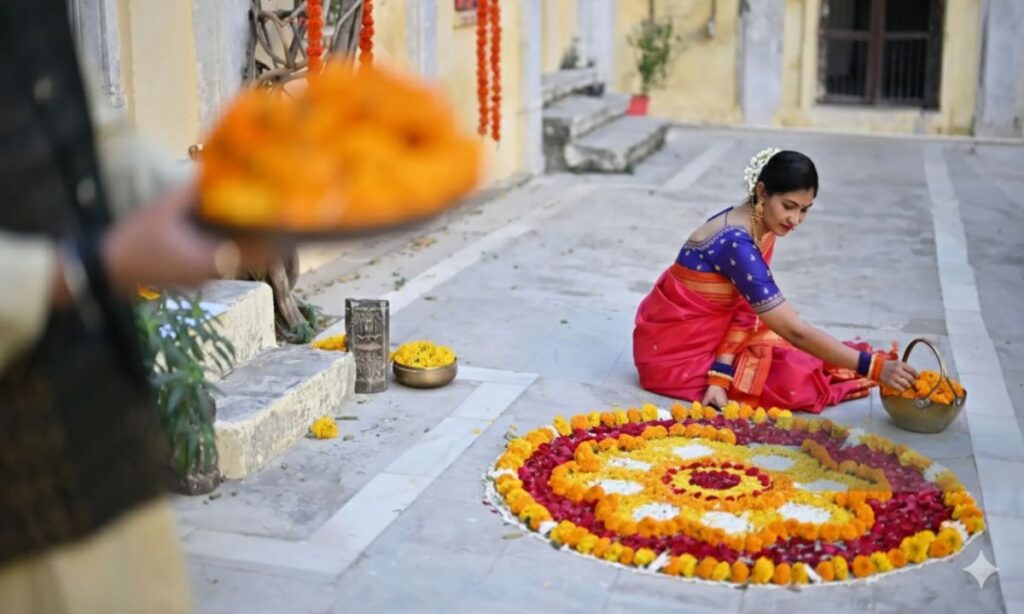
- Flower petal rangoli: Fresh petals from marigold, rose, or chrysanthemum create vibrant and natural patterns.
- Rice flour rangoli: Safe, natural, and eco-friendly. It can even serve as food for ants and birds later, which makes it zero waste.
- Natural rangoli powders: These are available online and made from organic pigments like beetroot, turmeric, and spinach.
Personal Experience: Once, I used dried flower petals from a wedding to make a rangoli design during Holi. It looked unique, colorful, and I felt happy that I was reducing waste.
7. Eco-Friendly Festive Tableware
When you are hosting guests, the dining setup also plays a big role in decoration. Disposable plastic plates and glasses are convenient but harmful to the environment. Switching to eco-friendly tableware makes a huge difference.
- Areca leaf plates: These plates are strong, compostable, and look very elegant. They are perfect for large gatherings.
- Steel and brass utensils: Long-lasting and traditional, they give a rich festive feel.
- Clay cups (kulhads): These are perfect for serving tea, sweets, or desserts. They also remind many people of childhood village life.
Personal Experience: During Diwali, I served homemade sweets in clay kulhads. Everyone loved the nostalgic feeling and even asked where I got them from. It was a simple change but made the celebration feel more authentic.
8. Bamboo and Wooden Décor
Bamboo and wood are sustainable materials that add elegance and warmth to any festival. Unlike plastic, they are long-lasting and eco-friendly.
- Bamboo baskets: Use them to store sweets, dry fruits, or even as eco-friendly gift hampers.
- Wooden candle stands: These add a rustic and classy touch to your home décor.
- Bamboo blinds or mats: Great for creating a natural festive vibe in your living room or balcony.
Personal Experience: I used a bamboo fruit basket filled with fruits and flowers as my centerpiece last Diwali. It looked simple, natural, and very festive.
9. Minimalist Decorations
Sometimes the best decoration is not about filling every corner but about keeping things simple and meaningful. Minimalism is one of the most sustainable decoration choices because it focuses on quality over quantity.
- Choose a few key pieces: A set of clay diyas, a flower garland, or a bamboo basket is often enough to make your home festive.
- Reusable items: Invest in décor pieces that you can use across multiple festivals, like fabric buntings or brass lamps.
- Create one highlight corner: Instead of decorating the entire house, focus on one corner with flowers, diyas, and a rug for a calming, festive vibe.
Personal Experience: Last year, I decorated just one corner of my living room with fresh flowers, clay diyas, and a jute mat. It became the perfect photo spot for the family and felt very calming compared to the cluttered decorations I used to have before.
Final Thoughts
Shifting to eco-friendly festival decorations has been a truly rewarding journey for me. Not only do I feel proud about reducing waste, but my home also feels more alive, colorful, and refreshing during every celebration. Guests always notice the difference, and it often starts meaningful conversations about sustainable living.
It is important to remember that eco-friendly decorations do not mean boring or dull. With a little creativity and the right products, you can make your home look festive and elegant while also protecting the environment. Whether it is clay diyas, fresh flower torans, bamboo baskets, handmade fabric buntings, or solar-powered lights, each small choice adds beauty and reduces harm to nature.
So, this festive season, let us celebrate with joy, colors, and sustainability. When you choose sustainable festival décor, you will not only decorate your home but also create positive energy and lasting memories. Trust me, you will feel a deeper sense of happiness knowing your celebrations are both beautiful and planet-friendly.
Frequently Asked Questions
1. What are the best eco-friendly materials for festival decorations?
Clay, terracotta, bamboo, jute, cotton, natural flowers, and banana or mango leaves are some of the best eco-friendly materials for festival décor. They are biodegradable, safe for the environment, and add a traditional charm to your home.
2. Where can I buy eco-friendly Diwali decorations online?
You can find eco-friendly Diwali decorations on websites like Amazon, Flipkart, and local eco-stores. Popular options include clay diyas, bamboo baskets, fabric buntings, eco-friendly tableware, and biodegradable rangoli powders. Many small businesses also sell handmade, eco-friendly décor items on platforms like Etsy and Instagram shops.
3. Are clay diyas better than LED lights?
Yes, clay diyas are biodegradable, reusable, and part of our cultural tradition. They create a warm, natural glow and reduce plastic waste. LED lights, though bright, are often made with plastic and are not biodegradable. Choosing eco-friendly clay diyas helps both the environment and tradition.
4. How can I make DIY eco-friendly decorations at home?
You can easily create DIY eco-friendly decorations by upcycling and reusing items you already have. Some ideas include:
- Making rangoli with flowers, turmeric, or rice flour.
- Turning glass bottles into lamps with fairy lights.
- Using old cloth pieces to make buntings or wall hangings.
- Painting terracotta diyas with natural colors.