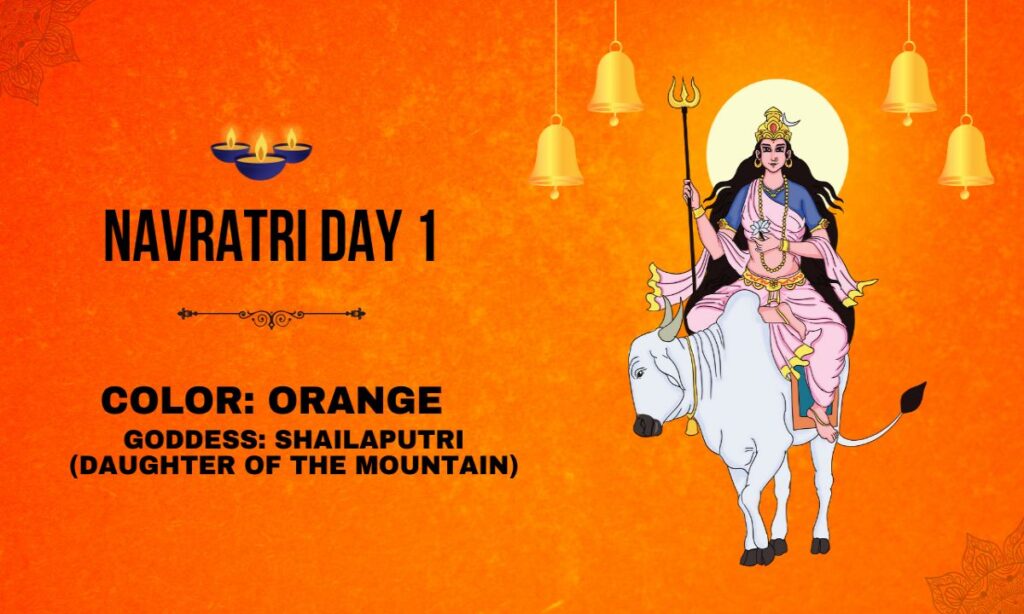
Navratri is one of the most important and widely celebrated Hindu festivals in India. The word Navratri comes from Sanskrit, meaning “nine nights,” and during these nine days, devotees worship the nine forms of Goddess Durga, collectively known as Navadurga. Each day represents a different manifestation of the divine feminine, symbolizing strength, purity, knowledge, and devotion.
The festival begins with the worship of Goddess Shailaputri on the first day. She is considered the daughter of the Himalayas and is worshipped as the provider of strength and spiritual awakening. Her blessings mark the auspicious start of Navratri, and her story is deeply rooted in Indian mythology, spirituality, and cultural traditions.
Who is Goddess Shailaputri?
The name “Shailaputri” is made of two Sanskrit words:
- Shaila – mountain
- Putri – daughter
Thus, Shailaputri literally means the Daughter of the Mountain. She is believed to be an incarnation of Goddess Sati, who sacrificed her life in the fire of her father’s yagna. In her rebirth, she was born to King Himavan, the ruler of the Himalayas, and was called Parvati or Hemavati.
In iconography, Shailaputri is depicted as:
- Riding on a bull named Nandi.
- Holding a trident (Trishul) in her right hand.
- Carrying a lotus flower in her left hand.
- Adorned with the crescent moon on her forehead.
This serene yet powerful form of the Goddess reflects courage, purity, and devotion.
The Mythological Story of Shailaputri
The story of Goddess Shailaputri begins with her past life as Sati, the daughter of King Daksha. Despite her father’s disapproval, Sati married Lord Shiva. When Daksha organized a grand yagna, he deliberately did not invite Shiva. Humiliated by her father’s insult to her husband, Sati immolated herself in the sacrificial fire.
Later, Sati was reborn as Parvati, the daughter of King Himavan, and came to be known as Shailaputri. With deep devotion, she performed penance and once again united with Lord Shiva.
This mythological tale highlights important values for devotees:
- Devotion and faith in righteousness.
- Courage to stand against disrespect and injustice.
- Determination to overcome challenges in life.
Spiritual Significance of Day 1 – Worship of Shailaputri
Worshipping Shailaputri on the first day of Navratri is not just about tradition—it carries deep spiritual meaning:
- Beginning of the Journey – As Day 1 marks the start of Navratri, Shailaputri represents new beginnings, grounding, and stability.
- Muladhara Chakra Activation – She governs the Muladhara (Root Chakra), located at the base of the spine. Worshipping her helps devotees feel stable, secure, and connected to the earth.
- Balance of Emotions – Shailaputri is associated with the Moon, which controls emotions and the mind. Devotees believe her worship brings calmness, peace, and emotional strength.
- Strength and Determination – She blesses devotees with courage to face struggles and determination to achieve their goals.
- Spiritual Awakening – With her blessings, devotees begin their spiritual journey with purity and devotion.
Astrological Connection of Shailaputri
Shailaputri is closely linked to the Moon (Chandra), which is a powerful planet in Vedic astrology. The Moon governs our emotions, thoughts, and inner balance.
- Worshipping Shailaputri is believed to strengthen the Moon in one’s horoscope.
- People facing mental stress, instability, or emotional imbalance are advised to seek her blessings.
- She helps devotees achieve mental peace, clarity, and positivity.
Day 1 Rituals and Puja Vidhi
On the first day of Navratri, devotees observe special rituals and worship Shailaputri with great devotion.
1. Ghatasthapana (Kalash Sthapana)
- A sacred Kalash (pot) is established at home or temple, filled with water, mango leaves, and topped with a coconut.
- This marks the official beginning of Navratri. The Kalash is considered a symbol of prosperity, purity, and divine energy.
2. Invocation of Goddess Shailaputri
- Devotees perform puja with flowers, incense sticks, and a ghee lamp.
- Her idol or picture is decorated with marigold or red flowers.
3. Offerings (Naivedya)
- On Day 1, offering pure ghee to the Goddess is considered highly auspicious. It is believed to ensure good health and a disease-free life.
4. Fasting (Vrat)
- Many devotees observe fasts, consuming only fruits, milk, and light vegetarian food.
- Some practice Nirjala Vrat (waterless fast) to purify the body and mind.
5. Mantra Chanting
- Devotees chant her mantras to seek blessings and protection.
Mantras of Goddess Shailaputri
Beej Mantra
“ॐ देवी शैलपुत्र्यै नमः॥”
(Om Devi Shailaputryai Namah)
Dhyana Mantra (Meditation Verse)
वन्दे वाञ्छितलाभाय चन्द्रार्धकृतशेखराम् ।
वृषारूढां शूलधरां शैलपुत्रीं यशस्विनीम् ॥
Meaning: I bow to Goddess Shailaputri, mounted on a bull, holding a trident, adorned with the crescent moon, who fulfills all desires and blesses devotees with success.
Chanting these mantras with devotion helps in removing fears, gaining courage, and starting life afresh with positivity.
Color of Day 1 – Orange
Each day of Navratri has a specific color associated with it. For Day 1, the color is Orange.
- Orange symbolizes energy, enthusiasm, warmth, and joy.
- Devotees wear orange clothes while performing puja on Day 1.
- The color is believed to attract divine blessings and fill life with positivity.
Symbolism of Shailaputri’s Form
Every element of Shailaputri’s form carries deep symbolism:
- Bull (Nandi) – Represents strength, patience, and hard work.
- Trident (Trishul) – Signifies the courage to fight against evil.
- Lotus – Symbolizes purity, devotion, and rising above worldly attachments.
- Crescent Moon – Represents calmness, wisdom, and emotional balance.
Together, they inspire devotees to lead a life of courage, devotion, and purity.
Benefits of Worshipping Shailaputri
Devotees believe that worshipping Goddess Shailaputri on the first day of Navratri brings multiple blessings:
- Health and Well-being – Ensures good physical and mental health.
- Courage and Determination – Strengthens willpower to face difficulties.
- Peace of Mind – Helps in balancing emotions and reducing stress.
- Spiritual Progress – Opens the path for higher spiritual awakening.
- Prosperity and Success – Removes obstacles and blesses with happiness and stability.
Importance for Indian Households
In Indian culture, the first day of Navratri is considered extremely auspicious. Families prepare their homes, decorate with flowers, and light diyas to welcome the Goddess. Communities organize Durga Puja pandals, Garba nights, and Dandiya events.
For many devotees, Day 1 is also the day to set intentions for the rest of the Navratri period—whether it’s health, prosperity, or spiritual growth. Shailaputri’s worship gives them the inner strength to achieve those goals.
Conclusion
Day 1 of Navratri is dedicated to Goddess Shailaputri – the Daughter of the Mountain. She symbolizes courage, purity, and devotion. Her story teaches us about resilience, standing for truth, and the importance of unwavering faith.
By worshipping her, devotees strengthen their foundation, much like the Muladhara Chakra, which supports the body and spirit. As we begin Navratri with Shailaputri’s blessings, we step into the festival with positivity, determination, and divine energy.
The journey of Navratri is not just about rituals—it’s about spiritual growth. And with Shailaputri, that journey begins with strength, purity, and devotion.