Navratri, one of the most sacred Hindu festivals, is celebrated over nine days with devotion, music, dance, and rituals dedicated to the nine forms of Goddess Durga, collectively known as Navadurga. Each day honors a unique form of the divine mother, symbolizing different powers, lessons, and blessings.
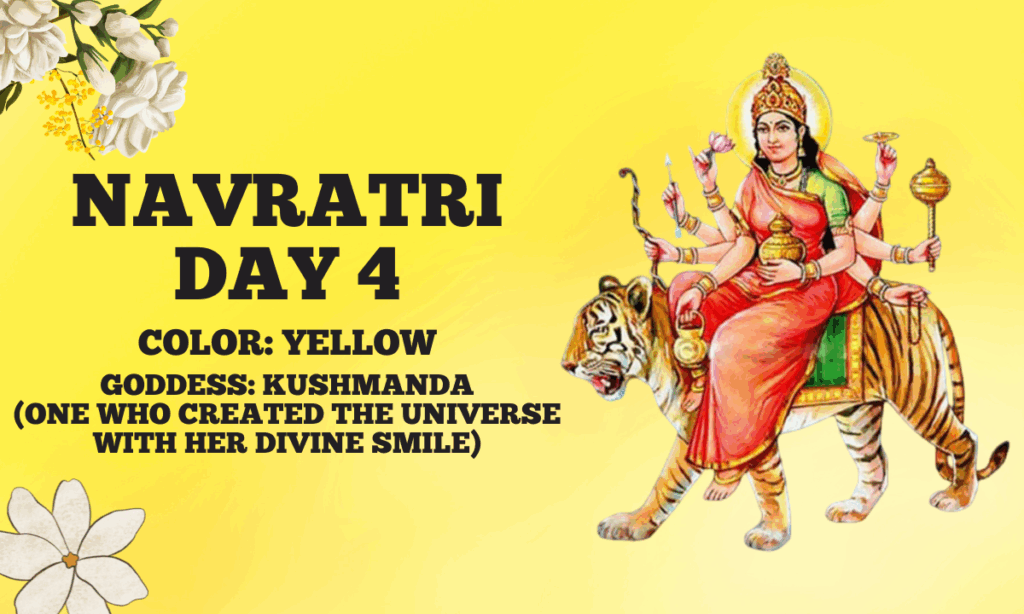
The fourth day of Navratri (September 25, 2025) is dedicated to Goddess Kushmanda, known as the cosmic mother who created the universe with her divine smile. She represents boundless energy, positivity, and the power of creation. Worshipping her is believed to bring health, strength, prosperity, and spiritual clarity.
Quick Facts: Navratri Day 4 – Maa Kushmanda 2025
- Date: Thursday, September 25, 2025
- Goddess: Maa Kushmanda (the creator of the cosmic egg)
- Colour of the Day: Yellow (symbolizing growth, positivity, and prosperity)
- Bhog (Offering): Malpua, along with seasonal fruits
- Puja Timings (Shubh Muhurat):
- Brahma Muhurat – 04:33 AM to 05:21 AM
- Abhijit Muhurat – 11:47 AM to 12:35 PM
- Vijaya Muhurat – 02:12 PM to 03:00 PM
- Chakra Associated: Anahata (Heart Chakra)
- Mantra:
“ॐ देवी कुष्माण्डायै नमः॥”
(Om Devi Kushmandayai Namah)
Who is Goddess Kushmanda?
The name Kushmanda comes from three Sanskrit words:
- Ku – “a little”
- Ushma – “warmth” or “energy”
- Anda – “cosmic egg”
Thus, Kushmanda means “the one who created the universe in the form of a cosmic egg with her energy and divine smile.”
She is believed to have existed before the creation of the universe. When the cosmos was in complete darkness, Goddess Kushmanda smiled, and her divine energy gave rise to the sun, planets, and all forms of life. This is why she is called the Adishakti – the first energy of creation.
Iconography of Maa Kushmanda
In scriptures and devotional art, Maa Kushmanda is depicted as:
- Having eight or ten hands (Ashtabhuja or Dashabhuja).
- Holding a kamandalu, bow, arrow, lotus, gada (mace), chakra (discus), and japa mala (rosary).
- Carrying a pot filled with nectar (amrit kalash) that grants health and prosperity.
- Seated gracefully on a lion, symbolizing courage and power.
- Surrounded by an aura as radiant as the sun.
Every symbol reflects her role as the source of light, life, and energy.
Mythological Story of Kushmanda
According to Hindu mythology, before creation, there was pure darkness. Neither time, nor directions, nor life existed. At that moment, Maa Kushmanda appeared and, with a divine smile, created the cosmic egg (Brahmanda) that gave birth to the universe.
She filled life into the sun, filling the cosmos with warmth, energy, and vitality. Devotees believe that the sun’s brilliance and power are her blessings.
This story teaches:
- Creation can emerge from nothingness.
- Positivity (her smile) dispels the deepest darkness.
- The feminine divine is the eternal source of existence.
Spiritual Significance of Day 4
Worshipping Maa Kushmanda on the fourth day of Navratri carries deep meaning:
- Source of Life: She is worshipped as the energy behind the sun, sustaining all life on earth.
- Heart Chakra Activation: She rules the Anahata Chakra, opening the heart to compassion, love, and balance.
- Health & Vitality: Devotees pray to her for strength, recovery from illness, and long life.
- Positivity & Joy: Her smile symbolizes happiness and helps remove sadness, fear, and negativity.
- Wealth & Prosperity: She is believed to grant abundance, career success, and family harmony.
Astrological Connection of Maa Kushmanda
In Vedic astrology, Goddess Kushmanda is linked to the Sun (Surya), which represents energy, confidence, vitality, and leadership.
- Worshipping her strengthens the placement of the Sun in one’s horoscope.
- Beneficial for those struggling with low confidence, poor health, or a lack of direction.
- Her blessings bring clarity, courage, and the power to shine in life.
Day 4 Rituals and Puja Vidhi
On this day, devotees perform rituals with devotion:
- Ghatasthapana Continuation – The Kalash placed on Day 1 is worshipped daily.
- Invocation of Maa Kushmanda – Idol or image is decorated with yellow flowers, red cloth, and ornaments.
- Lighting of Diya – A ghee lamp is lit to invite divine energy.
- Offerings (Naivedya) – Malpua, seasonal fruits, meetha paan, supari, laung, and elaichi are offered.
- Fasting (Vrat) – Many observe sattvik fasts with fruits, milk, and simple meals.
- Chanting Mantras & Aarti – Recite Durga Chalisa, Durga Saptashati, and her beej mantra.
- Evening Aarti & Bhog – Aarti is performed before breaking the fast with sattvik food.
Colour of the Day – Yellow
Each day of Navratri has a symbolic colour. For Day 4 of Navratri 2025, the colour is Yellow.
- Meaning: Yellow represents joy, growth, prosperity, and divine energy.
- Practice: Devotees wear yellow attire, offer yellow flowers, and decorate homes with yellow cloth or leaves.
- Astrological Link: Yellow is connected with sunlight and positive vibrations, aligning with Maa Kushmanda’s energy.
Symbolism of Maa Kushmanda’s Form
Every element in her depiction carries spiritual meaning:
- Lion: Courage and fearlessness.
- Rosary (Japa Mala): Meditation, devotion, and spiritual growth.
- Nectar Pot: Healing, health, and longevity.
- Weapons: Protection from negativity and destruction of evil.
- Smile: The ultimate symbol of positivity, joy, and creative energy.
Benefits of Worshipping Maa Kushmanda
Devotees believe her blessings bring:
- Good Health & Healing – Freedom from diseases and vitality.
- Wealth & Prosperity – Success in business, career, and family life.
- Inner Joy – Removal of sadness, stress, and negativity.
- Spiritual Growth – Heart chakra activation and divine connection.
- Strength & Courage – Determination to overcome struggles.
Importance in Indian Households
- Families prepare Malpua as bhog and share it as prasad.
- Homes and temples are decorated with yellow flowers and fabrics.
- Communities organize Garba and Dandiya nights, with devotees wearing yellow attire.
- Many families also light lamps in their courtyards, symbolizing Maa Kushmanda’s light filling the home.
Conclusion
Day 4 of Navratri is dedicated to Maa Kushmanda, the mother who created the universe with her divine smile. She is worshipped as the cosmic energy behind creation, the giver of vitality, and the source of positivity.
Her worship not only removes darkness from the universe but also from within the human heart. By connecting with her, devotees invite health, prosperity, love, and strength into their lives.
As the goddess of the Anahata (Heart Chakra), she teaches compassion, joy, and harmony. Her blessings light the spiritual path, just as her smile once lit up the entire cosmos.