
Most of us take December 25 as the official day for Christmas — the day of lights, trees, and joyful carols. But have you ever wondered why Christmas is celebrated on this exact date? Interestingly, the Bible never mentions the actual birthday of Jesus. In the early years of Christianity, different churches had different opinions about when to celebrate His birth. Over time, December 25 became the accepted date for most Christians around the world. The reason, however, is not as simple as it seems. It’s a mix of religious beliefs, old Roman festivals, and calendar traditions that already existed long before Christmas began.
This article will take you through the interesting story of how December 25 became Christmas Day. You’ll learn how early Christians tried to figure out the date of Jesus’ birth, how old Roman winter festivals influenced it, and how church leaders and traditions helped fix the date over time. We’ll also see why some Christian groups still celebrate Christmas on other days, like January 6. The goal is to explain everything in simple words and share some lesser-known facts that most people have never heard about Christmas.
1. The Bible never mentions Jesus’ birthday
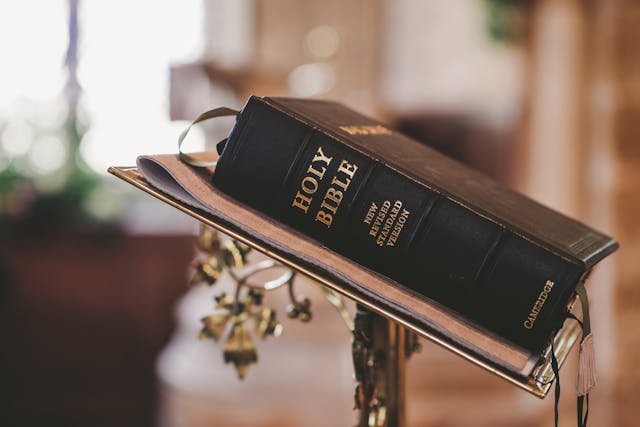
When we read the Bible, we find the story of Jesus’ birth in the Gospels of Luke and Matthew. Luke tells us about the shepherds in the fields, and Matthew talks about the Wise Men (or Magi) who came to visit. But if you look closely, nowhere does the Bible mention the exact day or month when Jesus was born.
This means the first followers of Jesus had no specific date to celebrate His birthday. In fact, early Christians were more focused on the teachings, miracles, death, and resurrection of Jesus, rather than on His birth.
For the first few hundred years, Easter was the main celebration for Christians, as it marked the resurrection — the core of their faith. Birthdays, especially in ancient Jewish and Christian culture, were not as important as they are today. So, celebrating Jesus’ birth came much later, as the Christian faith spread and people wanted a special day to remember His arrival in the world.
2. How two main Christmas dates appeared — December 25 and January 6
As Christianity grew across different parts of the world, people began to wonder: When should we celebrate the birth of Jesus? Since the Bible didn’t give a date, early church leaders tried to estimate one. By the 3rd and 4th centuries, two main dates started to appear in different regions:
- December 25 — used mostly by churches in the Western Roman Empire (such as in Rome).
- January 6 — celebrated mainly in the Eastern churches (like Egypt, Greece, and parts of the Middle East).
At first, both dates existed side by side. Some Christians even celebrated both! But over time, traditions began to settle. The Western Church, centered in Rome, made December 25 the official day to celebrate the Nativity of Jesus (His birth).
Meanwhile, the Eastern Church kept January 6 as a major holy day, which became known as Epiphany — a day that remembers when the Wise Men visited Jesus and, in some traditions, also celebrates His baptism.
Even today, some Christian communities, like the Armenian Church and certain Orthodox Churches, still celebrate Christmas on January 6 or January 7, depending on their calendar system.
So, the idea of Christmas wasn’t fixed right away — it evolved slowly as the faith spread across cultures, calendars, and continents.
3. How early Christians used “calendar math” to choose December 25
One interesting theory about why Christmas is celebrated on December 25 comes from the way early Christians calculated important dates.
In the ancient world, some people believed that great prophets or holy figures died on the same date they were conceived. This idea symbolized that their life was a perfect, complete circle — beginning and ending on the same day.
Using this belief, some early church scholars tried to calculate the timeline of Jesus’ life. They believed that Jesus was crucified on March 25, the same date that later became known as the Feast of the Annunciation — the day when the angel Gabriel told Mary she would give birth to Jesus.
So, if Jesus was conceived on March 25, then counting nine months forward leads exactly to December 25. That’s how many early Christians reasoned that Jesus must have been born on December 25.
It wasn’t based on any clear record, but on a symbolic and mathematical belief that connected His conception and birth in a meaningful way. Over time, this reasoning became one of the strongest religious explanations for choosing December 25 as the date of Christmas.
4. Roman festivals and the winter sun — the cultural connection
Before Christmas became a Christian festival, December was already a busy month for celebrations in the Roman Empire. People across Rome took part in lively festivals filled with music, feasts, and gift-giving — much like how we celebrate Christmas today. Two of these ancient festivals are especially important to understand how December 25 became special.
1. Saturnalia – The festival of joy and fun
Saturnalia was one of the most popular Roman festivals. It was held in mid-December to honor Saturn, the god of agriculture. During this time, normal rules were relaxed — people exchanged gifts, enjoyed big feasts, decorated their homes with greenery, and even let slaves and masters swap roles for fun. It was a time of laughter, kindness, and celebration after the harvest season.
2. The Birthday of the Unconquered Sun (Dies Natalis Solis Invicti)
Another important Roman festival was the “Birthday of the Unconquered Sun,” or Dies Natalis Solis Invicti, which took place around December 25. Romans believed that after December 21 — the winter solstice — the days started getting longer again. To them, it looked as if the sun was reborn after its weakest point.
The sun god, Sol Invictus, became very popular, especially under later Roman emperors. They promoted this festival as a symbol of light overcoming darkness, a theme that also connected naturally with the Christian belief in Jesus as the “Light of the World.”
How this influenced Christmas?
When Christianity started to spread throughout the Roman Empire, people were already used to celebrating during this time of year. Instead of trying to stop these joyful traditions, the early church decided to give them new meaning.
By choosing December 25 as the date for Jesus’ birth, Christians could celebrate the coming of spiritual light in a world that already celebrated the return of the physical sun. This made it easier for new converts to adjust and for Christian celebrations to blend smoothly with familiar customs.
So, rather than erasing the fun of the season, the church replaced the old festivals with a new, sacred purpose — honoring the birth of Christ. Over time, the Christian meaning became stronger, and the older Roman traditions faded away or transformed into what we now know as Christmas customs.
5. Political and pastoral reasons — how December 25 united people under Christianity
By the 4th century, Christianity had become the official religion of the Roman Empire. This meant the church now had to guide not just small groups of believers but an entire empire filled with people from many different cultures and traditions.
To help people adjust smoothly to the new faith, church leaders made some practical and thoughtful choices. Celebrating Jesus’ birth in late December turned out to be a smart decision for many reasons:
- It gave people a Christian alternative to the popular pagan winter festivals that were already happening.
- It helped unite Christians across the empire, giving them one shared celebration date.
- It allowed new believers to keep their joyful winter traditions but with Christian meaning added to them.
In simple terms, choosing December 25 worked both as a pastoral decision (to guide people gently into Christianity) and as a political decision (to create a common religious rhythm across the empire).
It helped make Christianity not just a private belief but also a public celebration — one that could bring people together during the darkest days of winter with a message of light, hope, and renewal.
6. How early church leaders helped fix December 25 as Christmas Day
Interestingly, there was no single meeting or rule that declared December 25 as the official day of Christmas. Instead, the date became accepted gradually, thanks to the influence of church leaders, writers, and local traditions.
By the mid-4th century, churches in Rome were already celebrating December 25 as the day of Jesus’ birth, often called the Feast of the Nativity.
Some early Christian writers, like Hippolytus of Rome, mentioned December 25 as the date of Christ’s birth even earlier. Church records and calendars from cities like Rome and Alexandria also show the same date being used by around 336 CE.
As Christianity spread across Europe and beyond, more and more churches adopted the same date. Over the next few centuries, December 25 became the standard celebration day for Christmas in the Western Christian world, and it was officially included in the liturgical calendar — the yearly schedule of church feasts and holy days.
So, even though no one ever issued a formal decree saying “Christmas must be on December 25,” the idea caught on naturally. Over time, the date became so deeply rooted in worship, culture, and family life that it turned into the universal symbol of Christmas we know today.
7. Why some churches still celebrate Christmas on January 6
While most Western Christians celebrate Christmas on December 25, many Eastern churches chose a different date — January 6. This day is known as Epiphany, which means “appearance” or “manifestation.”
In the early centuries, Eastern Christians saw January 6 as a day to celebrate not just Jesus’ birth, but also important moments that revealed who He was — such as:
- The visit of the Wise Men (Magi), which showed that Jesus was recognized by the world beyond Israel.
- The baptism of Jesus in the River Jordan, where He was revealed as the Son of God.
For them, January 6 represented the moment when Christ’s divine nature was made known to the world, which is why it became their main feast day instead of December 25.
Because of differences in beliefs, traditions, and calendars (the Eastern churches used the Julian calendar, while Western churches followed the Gregorian calendar), many Eastern Orthodox and Eastern Catholic churches continued to celebrate Christmas on January 6 or January 7.
Even today, countries such as Armenia, Russia, Ethiopia, Egypt, and Greece still hold major Christmas or Epiphany celebrations in early January. These differences remind us that Christianity developed in many cultures, each honoring Jesus in its own way.
8. How traditions and customs made December 25 permanent
Once people began celebrating Christmas on December 25, it quickly became a part of everyday life. Over time, it wasn’t just a church festival — it became a cultural tradition deeply tied to the winter season.
Here’s how it became fixed in people’s hearts and routines:
- Church calendars were updated to include December 25 as the official day for the Nativity.
- Markets and towns began preparing for winter feasts and gatherings around that time.
- Families developed customs such as gift-giving, singing carols, decorating homes, and later, setting up nativity scenes and Christmas trees.
- The season of Advent, the weeks leading up to Christmas, became an important time of prayer and preparation for believers.
All of these traditions, both religious and social, helped December 25 become the undisputed date for Christmas in most of the Western world.
Even when different calendars or beliefs existed elsewhere, the strength of custom and culture kept December 25 alive. Year after year, generation after generation, it became more than just a date — it became a symbol of joy, family, faith, and light in the darkest time of the year.
9. A Quick Timeline Summary
The journey to December 25 as Christmas Day was not instant — it evolved over centuries through theology, tradition, and practicality.
- No date in the Bible: The Bible never mentions the exact date of Jesus’ birth. Early Christians focused more on His resurrection (Easter) than on His birth.
- Early diversity: Different Christian groups celebrated various feasts and holy days. There was no single “Christmas” date in the early centuries.
- A theological calculation: Around the 3rd century, some theologians believed Jesus was conceived on March 25, the day they also associated with the Annunciation — when the angel told Mary she would bear a son. Counting nine months forward leads to December 25, making it a natural date to celebrate His birth.
- Cultural alignment with Rome: This date also coincided with popular Roman winter festivals like Saturnalia and the Birthday of the Unconquered Sun (Sol Invictus). These celebrated light returning after the darkest days of winter — a perfect symbol for the birth of Christ, whom Christians called the “Light of the World.”
- Widespread adoption: By the 4th century, records from Rome show that December 25 was already celebrated as the Feast of the Nativity. The practice soon spread across Western Europe.
- The Eastern difference: Meanwhile, many Eastern Christian churches focused on January 6, known as Epiphany or Theophany, marking the visit of the Magi and Jesus’ baptism — both seen as divine revelations of Christ to the world.
- Over time, Western and Eastern traditions grew side by side — one centering on December 25, the other on January 6 or 7.
So, the date of Christmas wasn’t just picked at random — it grew out of a mix of faith, calendar logic, and cultural connection.
10. Common Myths and Clarifications
Myth 1: Christmas was created to replace pagan holidays.
Partly true — but not the full story.
It’s true that early church leaders used existing pagan festivals to make Christianity easier to adopt. Roman people were already celebrating joyfully in late December, so placing Jesus’ birth around the same time allowed a smooth transition.
But there were also deep theological reasons (like the March 25 conception belief) and pastoral goals — helping converts feel at home in a familiar season. So, Christmas wasn’t just a “copy” of pagan holidays; it was a spiritual reinterpretation of the season’s symbolism — light overcoming darkness.
Myth 2: All Christians celebrate Christmas on December 25.
False.
Not all churches follow the same calendar. The Western churches (like Roman Catholics and Protestants) use the Gregorian calendar, celebrating Christmas on December 25.
However, many Orthodox churches still follow the Julian calendar, where December 25 falls 13 days later, on January 7 by modern reckoning. Some Eastern traditions also emphasize January 6 for the Epiphany, which combines both the Nativity and the Baptism of Jesus.
This means that, depending on where you are, Christmas might be celebrated twice — once in December and once in January!
11. Why This History Still Matters?
Understanding why Christmas is celebrated on December 25 gives us a window into how religion, culture, and history shape one another.
- It shows how the early church blended faith and familiarity, choosing a time that symbolized light returning to the world — both naturally (after the winter solstice) and spiritually (through the birth of Christ).
- It reminds us that traditions often grow by transforming what already exists rather than erasing it. Old pagan customs were given new Christian meanings, allowing faith to take root in everyday life.
- It highlights how the same story — the birth of Jesus — can be honored differently around the world, yet still share a common message of hope, renewal, and light.
- And even today, Christmas continues to evolve. From family gatherings to charity work, music, and festive lights — the season still reflects how people, across centuries, have found meaning and joy in midwinter.
Conclusion
Christmas is on December 25 for several overlapping reasons: early Christian calendar math that linked Jesus’ conception to March 25, the timing of Roman winter festivals (especially Sol Invictus), and pastoral choices by church leaders to fold popular celebrations into Christian life. Over time, customs, liturgy, and culture locked the date into place. So December 25 is less a single decision and more a long story of theology, culture, and human habit.