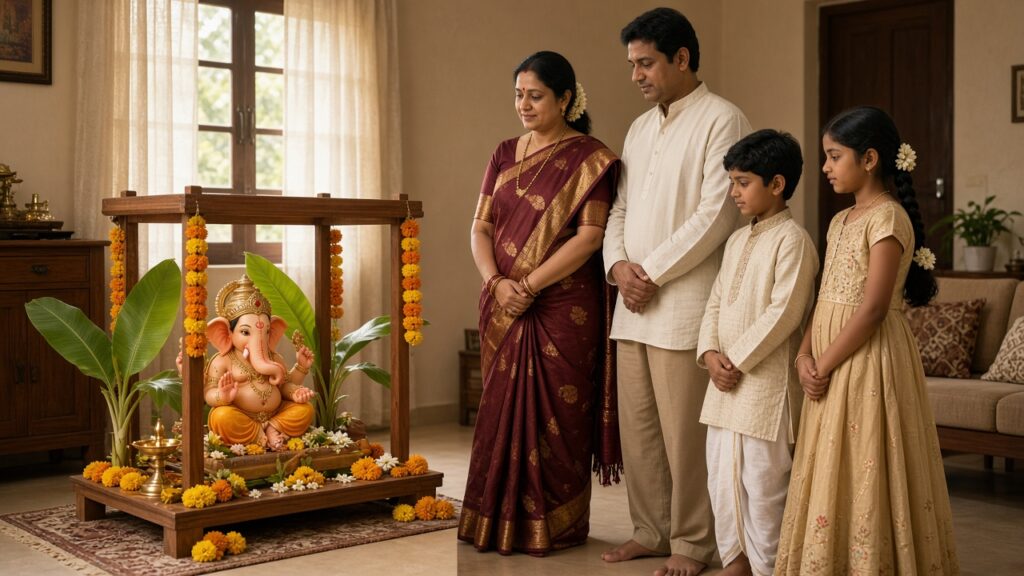
Ganesh Chaturthi is a home festival first. Bappa comes to your house. You do puja every day. Then you take him for visarjan. So the clothes should match that life — clean, simple, and easy to move in.
You do not need a wedding wardrobe. You need two or three good outfits that you can wear with respect. This guide tells you what works for women, men and children in 2026, and what you can skip.
The one rule that solves most confusion
Wear clothes you would wear to a temple or to a respected elder’s house. That one line is enough.
That means:
- Clothes should cover the shoulders and sit well when you sit on the floor.
- Colours can be festive — maroon, cream, gold, yellow, green, peach — but they should not shout.
- Fabric should let you do aarti, cook prasad, and walk for visarjan without worry.
- New clothes are nice if you can buy them. Freshly washed old clothes are also fine. Clean matters more than new.
Ganesh Chaturthi 2026 starts on Monday, 14 September (sthapana) and visarjan / Anant Chaturdashi falls on Friday, 25 September. If you keep Bappa for 1.5, 3, 5, 7 or 10 days, plan outfits for those days only. You do not need a new dress for every day.
What women should wear
Most women in India already have the right clothes at home. The question is which one to pick for which day.
Sthapana day and evening aarti — a saree is the safest choice
On the first day, family comes home. Photos are taken. The mandap looks new. A saree makes the day feel complete.
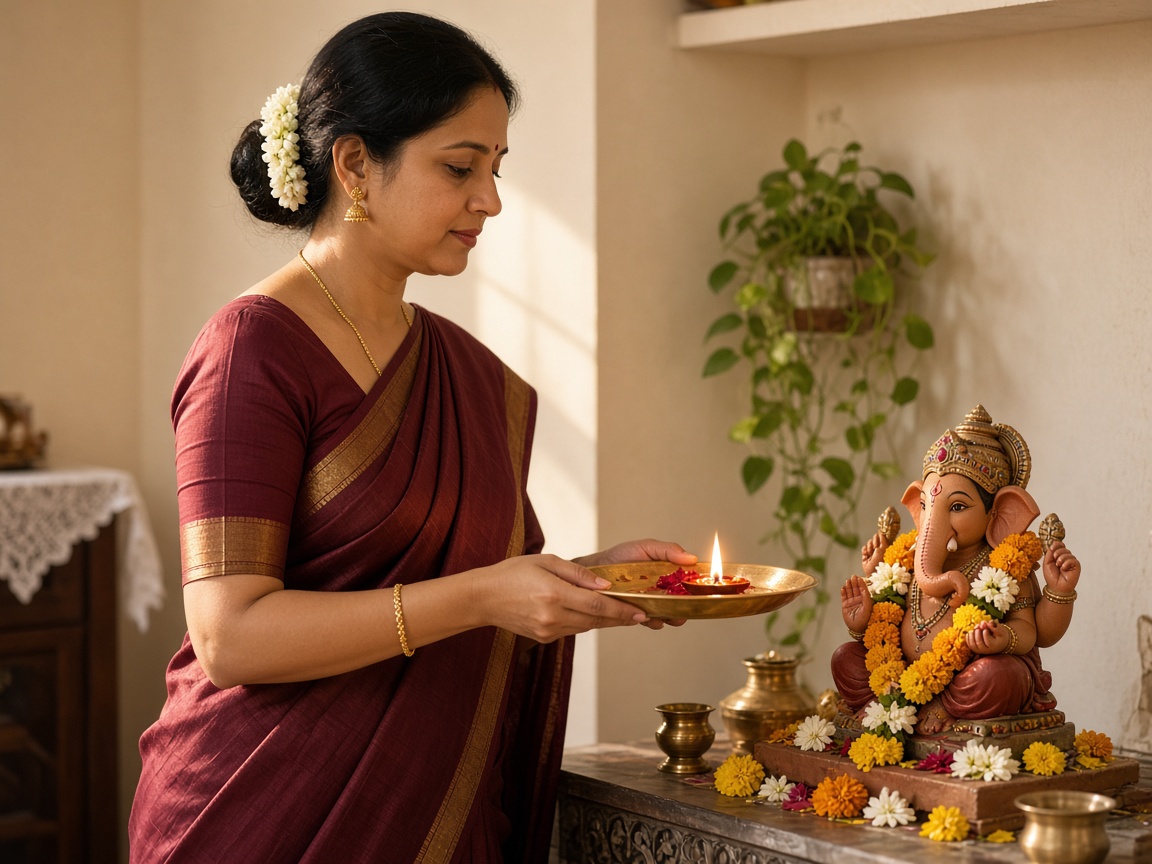
Good saree choices:
- Maroon, wine or deep red — looks festive in photos and hides small stains from kumkum or oil.
- Cream, ivory or light gold — looks calm next to marigold and a clay idol.
- Mustard or mango yellow — a happy Ganesh colour, good if you already own one.
- Green — traditional in many Maharashtrian homes.
Fabric: cotton-silk, linen-silk, or a light silk. Pure heavy silk is beautiful, but September is still warm in most of India. If you sweat, you will keep adjusting the pallu. That is not peaceful during puja.
How to drape: a normal nivi or nauvari if that is your home style. Keep the pallu pinned. You will lift the aarti plate, bend to put flowers, and sit. A loose pallu will fall into the diya.
Jewellery: one chain, small earrings, a simple bangle set. Leave the heavy bridal set for weddings. You need free hands for the thali.
Hair: a neat bun or plait with a small gajra is enough. Open hair looks pretty in photos but it comes in the way when you bend near the diya.
Daily puja days — a kurta is more useful than a saree
If Bappa stays for 5, 7 or 10 days, you cannot wear a full saree every morning and still cook, pack tiffin, and go to work. A cotton kurta with churidar or palazzo, plus a light dupatta, is the everyday Ganesh look.
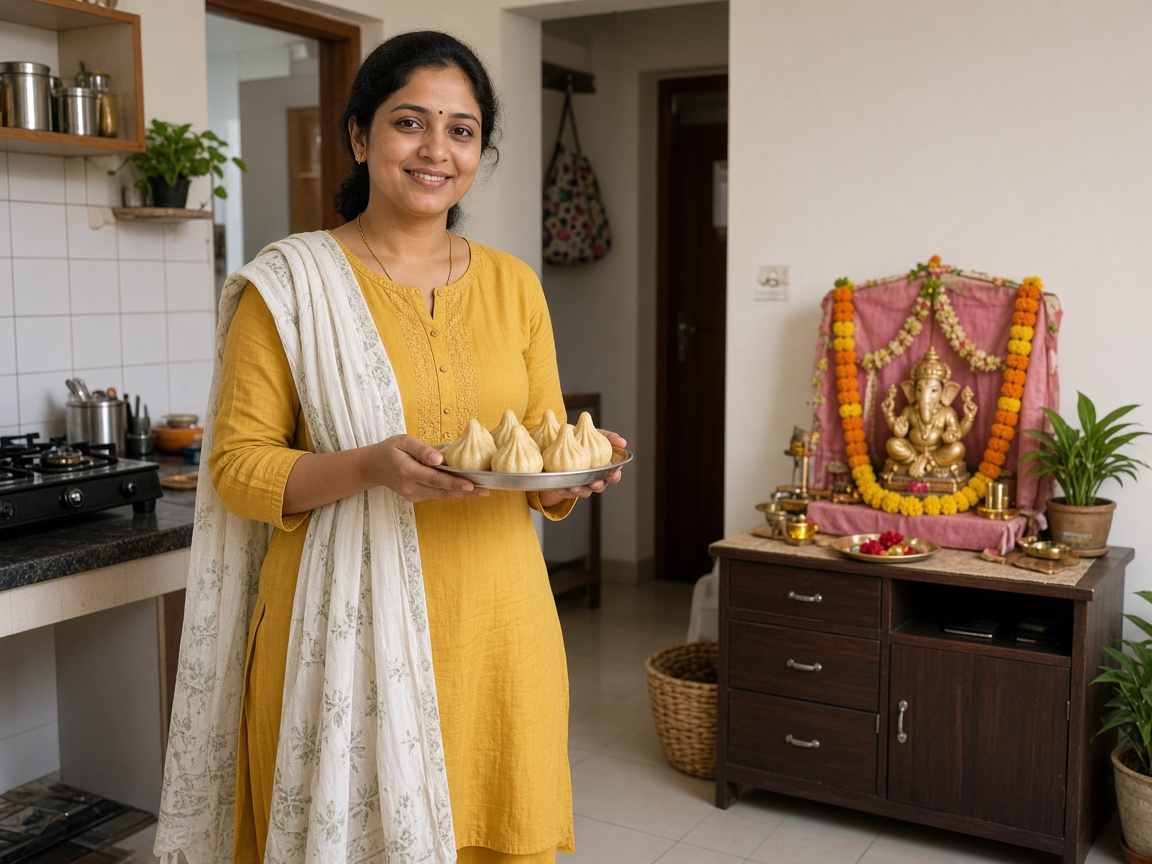
What to buy if you need one new piece:
- A straight cotton or linen kurta in mustard, cream, peach or sage.
- Length that covers the hips well, so you can sit on the floor.
- Sleeves at least to the mid-arm. Sleeveless is fine at a party, not ideal for aarti.
- A thin dupatta you can put on only for puja, then keep aside while cooking.
Salwar-kameez and simple anarkali also work. Avoid net, heavy mirror work and very tight heps. You will sit, stand, and walk many times in one evening.
If you go to a pandal or society aarti
Wear the same rule: modest and neat. A saree or a good kurta-dupatta is enough. Carry a stole if the AC is strong. Wear sandals you can remove quickly. Many pandals ask you to leave footwear outside.
What men should wear
Men often overthink this and then wear a crumpled office shirt for puja. You do not need a sherwani. You need one clean kurta.
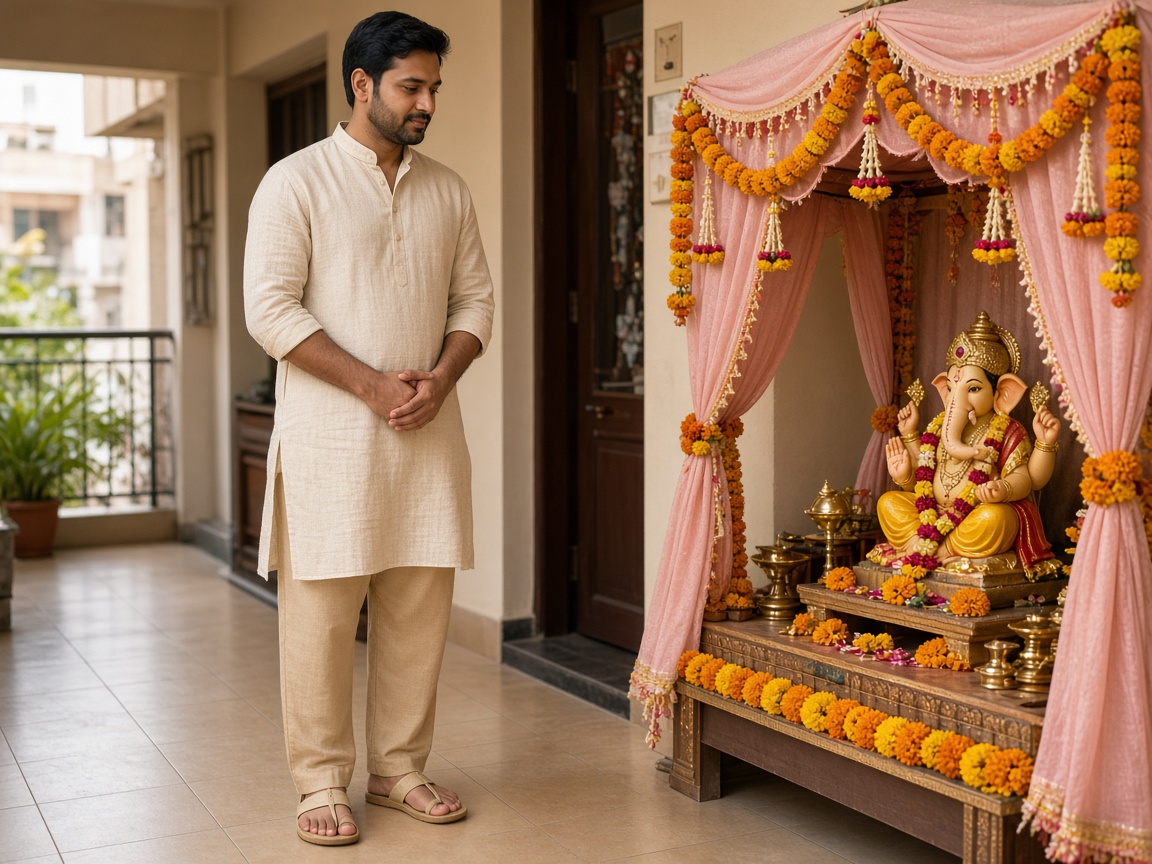
Best options, in order:
- Cotton or linen kurta + pajama — this is the winner. Cream, white, beige, light blue or sage.
- Kurta + jeans — okay for a quick evening aarti if the kurta is long and clean. Not the first choice for sthapana.
- Simple shirt + formal pant — fine if you come home from office and do puja. Change if the shirt is sweaty.
- Sherwani or Indo-western — only if it is a big family function. Too much for a normal home sthapana.
Fit: the kurta should sit on the shoulder, not hang like a tent, and not pull at the chest. Sleeve length to the wrist. Pajama or churidar should not drag on the floor — you will step on it near the mandap.
Footwear: mojari or clean sandals at home. Barefoot near the idol is common and correct. Outside, for pandal or visarjan, wear slippers you can walk in for an hour.
Grooming: a clean shave or a neat beard, combed hair. No strong perfume near the diya and flowers. It mixes with the agarbatti and feels heavy.
What kids should wear
Children do not need matching “couple-set” clothes with parents. They need clothes they can sit in, eat modak in, and not cry about.
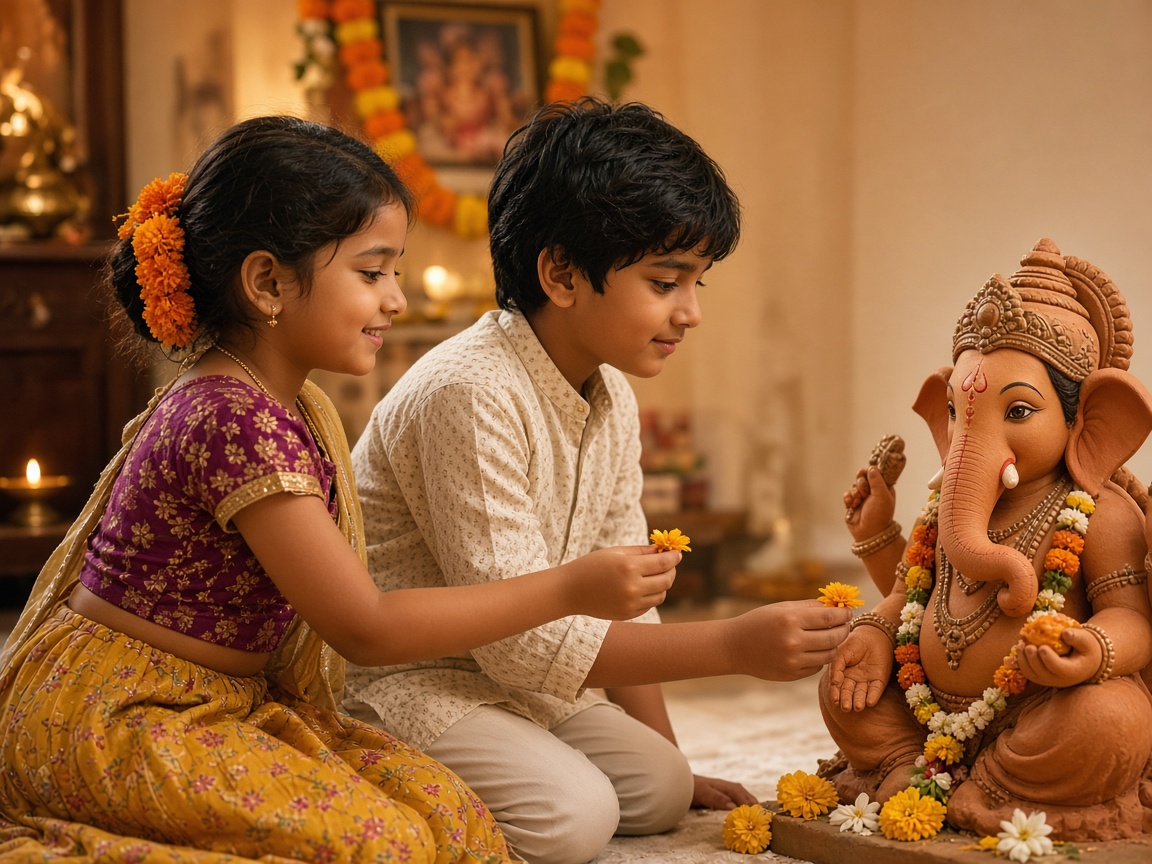
For girls: a simple chaniya choli, a frock-style kurta, or a small lehenga in cotton. Avoid heavy cancan and sharp embroidery on the waist.
For boys: a short kurta with pajama or dhoti-pants. White, cream or light maroon looks nice in family photos.
Practical tips parents forget:
- Buy one size easy, not skin-tight. Kids sit on the floor for aarti.
- Keep a spare white vest or inner for the boy. Prasad stains happen.
- No dangling earrings for small girls during aarti. They catch on the pallu.
- If the child has school the next morning, keep the heavy outfit only for sthapana evening.
What to wear on visarjan day
Visarjan is not a sofa festival. You may walk, stand in a queue, get a little wet, and carry the idol. Clothes must be comfortable first.
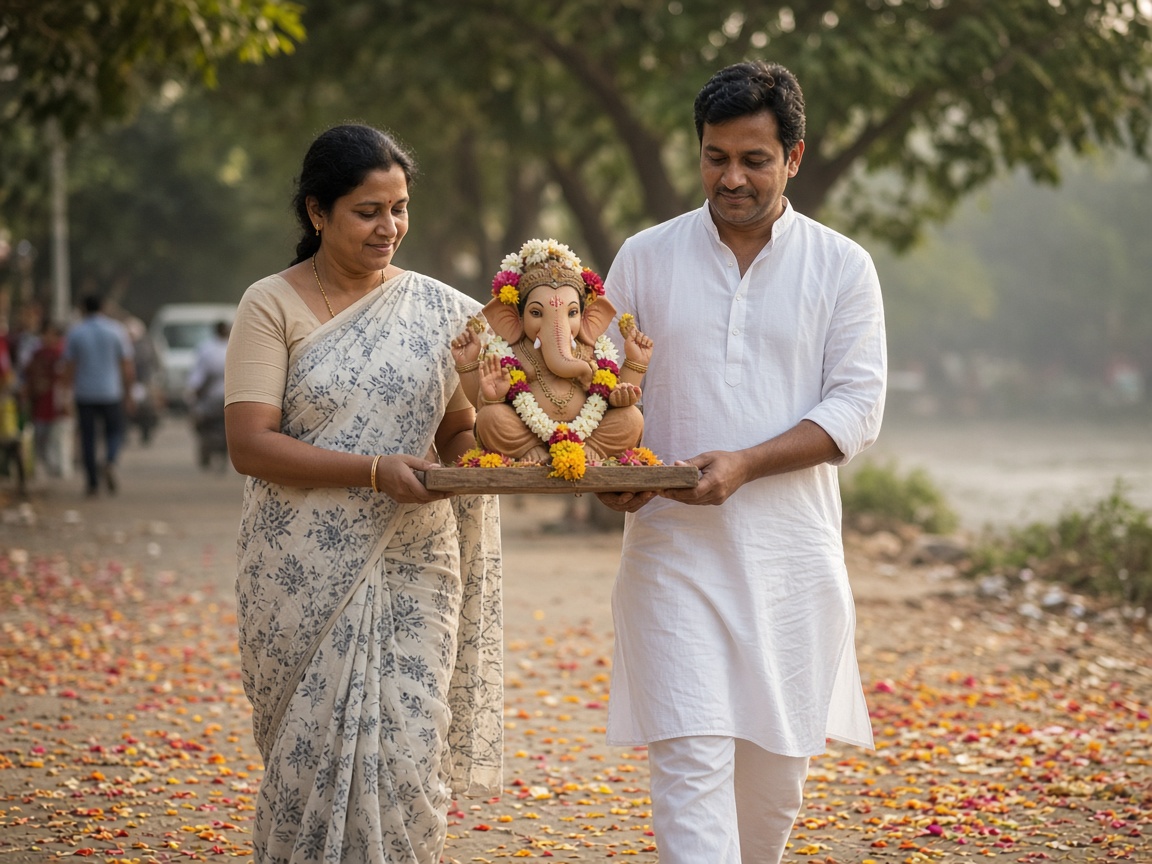
Women: cotton saree, or a kurta with dupatta, or a simple salwar. If you wear a saree, pin it well. You may need both hands for the idol.
Men: cotton kurta. Not white-white if you think there will be colour or water. Beige or light blue hides dust better.
Shoes: flat sandals with a back strap. Chappals that slip off in a crowd are a problem. You may have to walk on wet ground near the immersion point.
Carry a small cloth bag: extra dupatta, a bottle of water, and a plastic sheet for the idol base. Do not wear your best jewellery in a crowded visarjan route.
Colours that look right next to Bappa
There is no strict “you must wear yellow” rule for every home. Still, some colours sit well with marigold, banana leaf and clay.
- Easy festive colours: maroon, cream, gold, mustard, green, peach, rust.
- Also fine: light blue, beige, onion pink, off-white.
- Use less: all-black, neon, very shiny metallic, loud cartoon prints on kids’ clothes.
Black is not a sin. Some families avoid it for puja. If your family follows that, keep black for later. If they do not, a black kurta with a gold dupatta can still look neat. Follow the house you are visiting.
How many outfits do you actually need?
This is where people overspend.
- If Bappa stays 1.5 days: one good outfit for sthapana-visarjan is enough. Same clothes can work if they stay clean.
- If Bappa stays 3 to 5 days: one saree or special kurta for day one, two daily kurtas, one comfortable set for visarjan.
- If Bappa stays 7 to 10 days: still not seven new dresses. Rotate three home outfits. Keep the special one for Saturday-Sunday aarti when guests come.
A simple shopping list, if you want to buy something this year:
- Women: one cotton-silk saree or one good kurta set. Not both, unless you truly need both.
- Men: one cream or beige kurta. Get it tailored if the ready-made shoulder is loose.
- Kids: one soft ethnic set. Buy after checking they can sit and squat.
What not to wear
These are not moral lectures. They are practical problems we see every year.
- Very short or very tight clothes — sitting on the floor becomes awkward. Family photos look uncomfortable.
- Heavy lehenga with a big cancan — it hits the mandap, the diya, and other people.
- Unpinned pallu or dupatta — fire risk near the aarti.
- High heels for visarjan — you will regret this in 10 minutes.
- Strong white that shows every turmeric spot — if you are making modak, wear cream or mustard instead.
- Clothes that need dry clean only — visarjan and prasad will not wait for the dry-cleaner.
Office to puja: the 10-minute change
Many people come home at 7 pm and aarti is at 7.30. Keep this ready on a chair from morning:
- One ironed kurta or a simple saree blouse already on the hanger.
- A dupatta folded with a pin attached.
- A small bindi and a pair of bangles in a bowl near the mirror.
- For men: kurta on a hanger, not in the cupboard pile.
Wash your hands and feet, change, and go. Do not spend 40 minutes on makeup. Bappa is waiting, and the modak is getting cold.
Budget guide (India, 2026)
Prices change by city and brand. Use this as a feel, not a rate card.
- Under ₹800: a simple cotton kurta from a local store. Good enough for daily puja.
- ₹800 to ₹2,000: a decent cotton-silk kurta set or a wearable cotton saree. Best value for most homes.
- ₹2,000 to ₹5,000: a nicer saree or linen kurta you will wear for Navratri and Diwali also. Buy this only if you will reuse it.
- Above ₹5,000: only if you love the piece. Ganesh Chaturthi does not ask for this.
If money is tight this month, skip the new clothes. Iron what you have. Buy flowers and a clay idol first. That is the festival. Clothes are only support.
A calm checklist for the week
- Pick sthapana outfit by 12 September. Try it once. Check if you can sit and lift an aarti plate.
- Keep two daily home outfits washed and ready.
- Keep one visarjan outfit that you do not mind walking in.
- Stitch or pin anything loose on 13 September, not at 8 am on 14 September.
- Keep one extra dupatta and one extra kids’ inner in the visarjan bag.
Quick answers
Can I wear western clothes?
A long midi dress or a modest co-ord can work for daily puja if it covers well and you add a dupatta for aarti. For sthapana, Indian wear still looks more at home in most families.
Do clothes have to be new?
No. Clean and ironed is the real rule. New is a bonus.
What if I am visiting someone else’s house?
Wear a little more formal than you would at home. Take a stole. Remove shoes without fuss. Do not wear a white outfit if you know they serve haldi-heavy snacks.
Can the whole family wear matching colours?
One colour theme — cream and maroon, or mustard and green — looks nice in photos. Full matching “team kit” clothes are not needed.
The look you are trying to get
When someone enters your house and sees Bappa, they should feel peace. Your clothes should not be the first thing they notice. The idol, the flowers, and the smell of ghee and modak should come first. You are in the photo, but you are not the festival.
Wear something clean. Sit comfortably. Do the aarti with both hands free. That is the Ganesh Chaturthi dress code.